Showing posts with label #curbdogs. Show all posts

Wednesday, October 11, 2023

Dave Vanderspek has been inducted into the US BMXA BMX Hall of Fame


Here's Dave Vanderspek on a local news segment about him and the Curb Dogs from 1985.  

It's really cool to see Dave Vanderspek, leader of the Curb Dogs, inventor of the Vander Roll, and amazing BMX freestyle rider, inducted into the BMX Hall of Fame.  As I've written about several times before, I lived in San Jose in 1985-86, and published my first zine there.  That zine, San Jose Stylin', is what landed me the job at BMX Action and FREESTYLIN' magazines in August of 1986.  Most of what I covered in 11 issues of that zine was the Bay Area scene, was made up of Dave Vanderspek, Maurice Meyer, and the Curb Dogs, and Robert Peterson, and the Skyway riders.  

So I knew Vander, and the other guys in that scene, and rode with them on the weekends, whenever I could get up to the monthly Beach Park Ramp Jams, or San Francisco.  The Golden Gate Park/Bay Area freestyle scene was the most cohesive scene of that era.  Most of the guys were at Golden Gate Park, on Sunday afternoons, every week.  All of the pros, Dave, Maurice, Robert Peterson, Rick Allison, Oleg Konings, and Hugo Gonzales, were always cool with helping newer and younger riders learn and improve.  That happened, to some degree, in most scenes then.  But it was a much bigger thing in the Bay Area.  

Dave, Maurice, Bert, and all those pros would help all of us learn new tricks.  Just the little things, "Hey, if you put your foot here, it would help you come out of it," or "I think if you lean this way, it'll help."  That kind of thing.  Some pros back then were just more into their own riding.  They wanted to learn new tricks and push the boundaries.  Teaching new riders wasn't a priority for many pros of the day.  The NorCal guys wanted everybody in the scene to improve, and have fun riding, not just themselves.  

The Golden Gate Park scene had a different vibe than every other freestyle scene I saw at the time.  Even if some brand new kid rolled up, who could only do one or two tricks, they'd help the kid learn something new that session.  That "make the whole scene better" vibe seemed to emanate from Dave, and through everyone else.  The more time went on, the more that had an effect on me, and still does, decades later.  

The reality is, I talked some smack about Vander back then, and was definitely jealous of how much magazine coverage he got, early on.  I'd seen photos of him in the magazines, before moving to San Jose.  Then I met him, and he seemed like a total goofball, he totally reminded my of Jeff Spicoli in Fast Times at Ridgemont High.  I didn't take him seriously at first.  

The best BMX photo I ever shot, this photo was complete luck.  I was just holding the camera.  Dave Vanderspek, at speed, at the Palm Springs Tramway Road GPV event, 1987.  

Then I got the job at the magazines, and learned that Andy and Lew at FREESTYLIN' were some of Vander's biggest fans.  It was actually in the handful of times I saw Dave after moving to Southern California, that I gained a lot more respect for him.  After meeting and riding with several other top pros, and seeing Dave ride some more times, I realized just how good of a rider he was.  

At one of the Velodrome contests, I rolled up to this little patch of pavement in the infield, near the contest area.  Dave was sitting there on his bike.  He started pedaling slow, and said, "Check this out."  Then he did a huge bunnyhop, and landed in a pedal stall, on the hubba part of this small set of stairs.  This was 1987, a year before the Santee Meet-the-Street contest.  Street riding was barely even a thing then.  Dave's pedal stall was like four feet off the ground.  Street grinds hadn't been invented yet. Wall rides hadn't been invented yet.  And Vander was doing this trick that would be impressive now, 36 years later.  Then he hopped down, and said, "Hey your frame is cracked."  Sure enough, there was a hairline crack in the Raleigh I was riding, right at this weird gusset it had.  I hadn't even noticed.  He explained why the weird design of the gusset would always be prone to cracks at that spot, just the way it was designed.  I later told Raleigh, and they changed the design, making the gusset much better.  

A couple of other times, Dave would roll up at an event, and talk about all the new tricks I'd learned since moving to SoCal.  For a few minutes we'd just talk about tricks or new stuff we were working on.  I had only ridden with Dave, at the Beach Park Jams, or Golden Gate Park, maybe a dozen times, while living in San Jose.  But he remembered what tricks I had been doing then, and commented on new stuff I was doing, a year or two later.  It wasn't just me, he did that for all the riders he knew, at any level.  So he'd  blow my mind with some crazy trick or move, then just sit there and talk a bit, like we'd been hanging out, riding together for years.  He truly wanted to see everyone he knew keep improving, and get as good at freestyle, or skating, as possible.  For a guy who was a solid, pro caliber rider, and who was always busy self-promoting shows, and all kinds of other stuff all the time, that was amazing.  

So it's great to see him honored in the BMX Hall of Fame now.  Here are a few other videos of Dave and the Curb Dogs, Skyway, and other NorCal riders and skaters of that era.  

"Nobody got hurt, nobody got arrested."  Dave has the white cap on backwards.  


Vision Street Wear's Freestylin' Fanatics (1988)- Dave's segment is at 11:20

Curb Dogs video #1 (One of the first few BMX freestyle videos ever- 1987)

2023 BMX Hall of Fame Induction Ceremony (Maurice Meyer accepts on Dave's behalf at 2:49:50)

And just for good measure, here's a local news segment about Maurice Meyer, which also shows the Golden Gate Park scene, and several of the amateur riders, as well.

Dave Vanderspek tribute drawing I did a couple years ago.  #sharpiescribblestyle

I've been doing most of my new writing on Substack now, check it out:


Sunday, April 3, 2022

The Number 43 and BMX... what I know...


I don't know who Dick Cheeseburger is, but a 43 foot jump is a 43 foot jump.  So how did the number 43 wind up tied to BMX?  Here's what I know.  


For any of you new to my blog, when I write about the old days of BMX freestyle and skateboarding, I write my own personal memories and ideas.  I never intend my blog posts to be "the official word" on any subject.  So these thoughts on how the number 43 became the official lucky number of BMX freestyle are my thoughts, and the part of the story I know something about.  

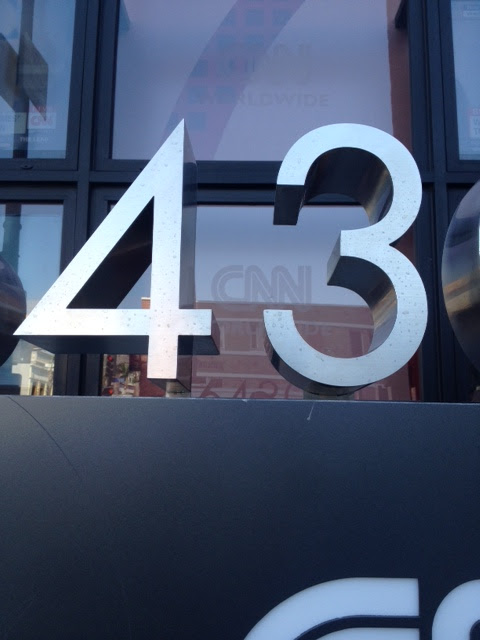
43 in an address in Hollywood.  #steveemigphotos

The whole 43 thing began with NorCal skaters and BMXers in the late summer of 1986.  At that time, The Curb Dogs, led by Dave Vanderspek, was a San Francisco bike/skate team that was as famous in the BMX world as the Haro, GT, and Skyway factory teams.  Skyway was the main NorCal based freestyle team.  Robert Peterson, Hugo Gonzalez, and Oleg Konings were on Skyway in 1986, along with San Diego rider Eddie Roman.  Maurice Meyer was both a Curb Dog, and a Skyway factory team member at the time  The number 43 became an inside joke among the Curb Dogs in 1986, and it began growing from there.  

In the summer of 1986, Maurice Meyer was profiled for a local TV show, called Pacific Currents.  The segment focused on Maurice, a solid pro rider who never got enough coverage back then.  In the Golden Gate Park footage in that clip, Karl Rothe, Chris Rothe, Mark McKee, Darcy Langlois, Tim Treacy, and myself (chasing bike at 5:07), are in there as well.  This piece was shot in June or July of 1986, and the 43 thing had not happened yet.  Shortly after this piece was shot, at the end of July in 1986, I moved to Southern California, when I landed a job at BMX Action and FREESTYLIN' magazines.  

I asked Maurice Meyer to check out this post, and he retold me the origin story.  There was a San Francisco skater named Rob, and his dad came home from the corner store and said, with a thick Persian accent, "How come every thing I buy there ends up in 43 cents?"  It was funny the way he said it, and it stuck in Rob's head.  He started noticing the number 43 around, as well, and shared the story with skater friends, the Curb Dogs, and other locals.  So the whole 43 thing began as a weird inside joke in 1986, in the S.F. skate/BMX freestyle scene.  Maurice shared an article in a Scandinavian magazine, that recounts the original story.  
One weird little inside joke turned into a worldwide thing in the BMX freestyle and skateboard subcultures.  #steveemigphotos

A couple of months later, in September or October '86, the NorCal crew came to SoCal, and stopped by Wizard Publications, where I worked.  Out in the parking lot, after work, the Wizard crew talked with the NorCal posse, about 15 or so riders.  Karl Rothe asked me how my new job as a magazine guy, was going.  I told him that I had just transcribed a super long interview with Skyway pro, and NorCal local, Robert Peterson, "It was like 43 pages when I typed it all up."  Karl, said, "Whoa, 43!"  I had no idea what he was talking about.   

The 43 origin story, from a Scandinavian magazine

Karl dragged me over to the rest of the guys, and had me tell them that Bert's interview was about 43 pages long when transcribed.  I asked what the big deal about 43 was, and they said that the number had been popping up all over for them, so it was like this inside joke among 20 or 30 NorCal BMXers and skaters at that point.  That's how I know the 43 thing happened sometime between late July and September 1986.  It wasn't a thing when I last rode with them at Golden Gate Park in July, and it had become an inside joke by early fall.  In the course of riding and hanging out, the word of the 43 thing slowly spread, like it did to me and the Wizard staff, that night in the magazine's parking lot.

As time passed in the late 80's, the affinity for the number 43 spread from the Curb Dogs to the Skyway team (including Eddie Roman and Mat Hoffman), and to other freestylers.  In 1990, I put a big 43 on the back of my video box for The Ultimate Weekend.  It said, "43 reasons to buy or rent this video," and listed 43 names of the riders in it, and big tricks in the video.  While my video wasn't a BMX blockbuster by any means, pretty much all the serious riders of the day saw it at some point.  There were very few videos out then.  By then, seeing the number 43 randomly was seen as a bit of good luck by a lot of freestylers.  
Tom Green skates, and he's knows what's up.

I think what really put the number 43 in more people's heads was Eddie Roman's 1991 video Headfirst, starring Mat Hoffman.  At 20:38 in the video, Eddie asks Mat how much money he makes a week,  Mat says, "A million, billion, quadrillion dollars... and 43.  Aaaagh 43!"  That little clip, in the single most influential BMX video of all time, probably did more to promote the number 43 in BMX freestyle than anything else.  Suddenly 43 was pretty much every rider's lucky number.  And the 43 thing just kept on growing.  

The 43 story in BMX is a lot like the 420 story in marijuana/cannabis/weed culture.  Something that started as a weird, little inside joke among a few friends, slowly grew into this worldwide thing in the subculture.  I love the idea of that, how a little inside joke can organically grow, spread widely, and become a part of the subculture.  So that's my take, with thanks to Maurice Meyer, on how the number 43 became the official lucky number of BMX freestylers worldwide.

A few people, including Drob, reminded me that John Malkovich lives in apartment number 43, in the movie, Being John Malkovich.  That movie, of course, was directed by Spike Jonze, who got hired at Wizard Publications after I got laid off for not being cool enough.  Spike knew the 43 thing well from his years as a rider and BMX photographer.  I couldn't find a shot of the actual door in that movie, though.  Just watch the movie again.


Mat Hoffman lands his first 900 at 14:43 in this video.  This is footage I shot at the 2-Hip King of Vert in Kitchener, Ontario, Canada in the Spring of 1989.  I shot the raw footage, and Eddie Roman edited it, and did the funny commentary, with some friends, for the 2-Hip video, Ride Like a Man.


OFG (Old Fat Guys) BMX podcast #43 - Scotty Zabielski and friend.  


Movie 43- This looks horrible, but has a bunch of big stars, including Johnny Knoxville, who's part of the Jackass posse, which includes Spike Jonze.  

Angel Number 43 - According to this video, 43 is a number sent to you by angels.  So angels must love BMX freestyle and skating.  Cool.


43 decimal stuff- If you like the number 43, are a math geek, and speak Hindi, this might make sense to you.

The Hitchiker's Guide to the Galaxy (movie) says the meaning of life is 42.  But it began as a comedy radio broadcast in 1978.  BMX freestyle had not officially become a thing then.  It was in its embryonic stage.  So the guy who wrote it couldn't possibly have known that the real meaning of life is 43, unless he had been hanging out with Bob Haro, which he wasn't.

For me, personally, I had an affinity for the number 43 long before it became a thing in BMX.  I was a 5-year-old living in some low income duplexes in about 1971.  We lived in Jackson Township, just outside of Massillon, Ohio.  One day a neighbor lady told us the number 13 was an "unlucky number."  Being little kids, we asked her, "Why?"  Like most adults, when asked "why?" she didn't have a good answer.  So us little kids spent some time talking about lucky and unlucky numbers.  Being a contrarian, even at age 5, I decided that 13 would be my lucky number.  

Our little crew of 5 and 6-year-olds decided to pick some other lucky numbers.  43 was our first pick, mostly because that was the sketchy UHF TV channel in our area that played scary monster movies, old time B movies.  "43 just sounds like a cool number," we thought.  We also picked 27, and 57.  So 13, 43, 27, and 57 seemed like the best "lucky numbers" to us kindergartners in Ohio back then.  For my childhood years, 43 was my back-up lucky number, behind 13.  That day we even noticed that odd numbers just seemed cooler than even numbers, for some reason, a pretty cool insight for kids that young. 

My family moved a lot when my sister and I were growing up.  We bounced around several houses in Ohio until I was 14, then lived in New Mexico for a year, and then moved to Boise, Idaho in 1981.  I got into BMX while living in a trailer park, outside of Boise, in 1982.  There was a 43 thing happening there that I didn't realize until a few years ago.  

What does Boise, Idaho have to do with the number 43?  By some weird coincidence, Boise sits just above 43 degrees of northern latitude.  Without realizing it until a couple of years ago, I got into BMX while living at 43 degrees of latitude.  That's also why there is now a Hotel 43 in Boise.  That's just another weird little 43 thing in my personal life.  Us Boise locals, and a bunch of riders across the top of the U.S., from New Hampshire to Oregon, started riding at, or around, 43 degrees of northern latitude.  Some of you reading this may be in that group.  

Then, decades later, while living with my mom back in 2017, I was talking on the phone with someone about the 43 thing.  My mom overheard me, and asked what the deal was with the number 43.  So I explained it to her.  "That's funny," she said, "when I worked at the phone company (early 1960's), my operator number was 43."  What can I say, it's everywhere...  

So that's what I know about the number 43, and how it became associated with BMX freestyle.   

The Hollywood American Legion sign, post #43.  #steveemigphotos


1/43 scale model at a hobby shop in Studio City, California, that has since closed down.  #steveemigphotos

This post had some serious issues originally, and I rewrote it on March 5, 2026.  

I do most of my writing on a platform called Substack now, designed specifically for writers.  Check it out.  

Sunday, December 1, 2019

Dave Vanderspek in action: Curb Dogs II video


I went looking for some more footage of Dave Vanderspek, and realized I've never seen this whole video, somehow.  Dave was all about having fun riding your bike and your skateboard.  He was a seriously talented rider, founder of the most popular independent freestyle and skate team of the 1980's, the Curb Dogs, one of the first to really push street riding, was sponsored by Skyway, Boss, and Kuwahara,put on the first BMX street and the first BMX halfpipe contests, and just a ton of fun to hang and ride with.  If you want to know why I drew the picture below as a tribute to him 31 years after his death, watch this video. 

"No one got hurt, no one got arrested."
-Dave Vanderspek 
(from the demo in the video above)

This drawing, in my Sharpie Scribble Style, is 11" X 14", and signed and numbered copies are available for $20 (includes shipping in continental U.S.)  Email me at: stevenemig13@gmail.com for details.  It's a limited run of 75 drawings, about 26 are gone already.  If you're a 1980's freestyler with a man cave or BMX collection, you need this in that mix. 

Wednesday, November 27, 2019

Just how good of a rider was Dave Vanderspek?

 1983.  What the fuck were you doing in 1983?  This is one of my favorite photos from the entire history of BMX freestyle.  Dave Vanderspek, tabletop bunnyhop, Golden Gate Park, San Francisco.  Look to the left of the photo, you'll see those high crossbar handle bars.  Those are 9 inch rise bars, the bottom of Dave's bottom bracket is 2 or 3 inches above that.  Dave, Maurice Meyer, and Robert Peterson could all do high tabletop bunnyhops.  They didn't bunnyhop straight and lay the bike sideways, they bunnyhopped and kicked the back end up to the side... the hard way. 

At one AFA Masters contest at the Velodrome in the fall of 1986, I was down on the infield and area riding around, and I ran into Dave.  There was a set of five or six stairs coming down from a higher level, and a narrow hubba wall thing, with a metal rail on top, next to the stairs.  Dave saw me and said, "Hey Steve, what do you think of this?"  He rode across the small paved area, and did this huge bunnyhop up into a pedal stall, on the angled hubba wall thing, missing the rail on top of it.  I'd never seen anyone bunnyhop into a pedal stall.  I said, "That's cool, but you can't do it in the contest."  I was lame, thinking only about my contest run, where I was probably going to get like 33rd out of 54 guys in 17 & Over intermediate, or something like that.

Meanwhile, Dave Vanderspek, who was riding pro, saw the wall thought, "I wonder of I can pedal stall that?"  While we were all thinking about contest placings and many guys about sponsors and all that, Dave was just riding shit.  It was 1986, street riding was something we all did, but it wasn't its own genre' yet.  It would be another year and a half or so before Dave held the first small street contest in NorCal, and then Ron Wilkerson (also originally from San Francisco) held the first one that got magazine coverage, at Santee.  Wall rides would be officially invented a year later. Street peg grinds had not been invented yet.   But I watched Dave Vanderspek do two or three huge bunnyhops to pedal stalls on a slanted wall.  He was landing on the back pedal, and he rode a coaster brake.  His pedals were pretty much level.  After he rode off, I went over and stood next to the wall where he was landing.  The place he was landing his pedal on was over 4 1/2 feet off the ground.


 Another favorite Vander photo of mine above.  Before wall rides, or looking for gaps, before peg grinds had even been invented, street riding often consisted of doing your flatland tricks in a really sketchy location.  Bar endo on a high corner of a ledge with no margin for error, about 1985.  These were a favorite of Dave's.  This photo is from an interview that was in Bill Batchelor's big newsprint zine, Shreddin'.
You know you're not a great photographer when you can easily name the best photo you've ever taken.  I'm not a great photographer, and this is the best photo I've ever taken.  Dave Vanderspek at the Palm Springs Tramway GPV race, outside Palm Springs, California, in 1987.  Without a fairing, Dave was at a disadvantage, he was probably only hitting 70 or 75mph at the bottom of the hill.  Tommy Brackens, riding with a fairing at this race, passed the camera motorcycle in a turn one run.  The motorcycle was doing 85mph.  Because the course was long and lacked lots of tight turns, people were hitting BIG speeds.
    The night before the contest, I remember seeing Dave and another guy walking their bikes out of the motel courtyard about 2am, with a 12 pack under one arm.  "Who wants to go hit the course right now?" he asked.  Only the guy heading with him went.  They hit that crazy fast course, on their GPV's, in the dark (desert road, no street lights)... drunk.

Vander airing over the six foot wide canyon, over Christian Hosoi.  AFA Masters contest, Venice Beach, California, 1985.  This happens to be the first California contest I ever made it to, thanks to Justin Bickel and his parents, from Idaho.  I'm in the background there somewhere, I shot this from the opposite angle, on my trusty Kodak 110 camera, and put the photo in my zine.  This is another of my favorite BMX freestyle photos of all time. 

      Dave Vanderspek was one of a kind.  That's why I just drew this tribute drawing of him.  Copies are available.  Find me on Facebook, or email me at: stevenemig13@gmail.com, for info.

Check out my new mash-up book/blog about the future:

I also have a new blog that will eventually take over as my main blog.  Check it out:

The Big Freakin' Transition
 

Tuesday, November 26, 2019

What Dave Vanderspek brought to the BMX Freestyle Party

Blog post:  What Dave Vanderspek brought to the freestyle party

This is photo of Dave Vanderspek was taken by 13-year-old Bill Batchelor, for his really amazing Shreddin' zine, from July of 1985.  This was a couple years before wall rides, three years before the first street peg grind photo in a magazine, and five years before the first handrail grinds on street.  Doing a bar endo in a really gnarly urban place was one of Vander's early street moves, setting the stage for the future of street riding to come.

 I started hearing about Dave Vanderspek in BMX Plus in 1983, when I was getting serious about BMX racing in Idaho, and only BMX Plus was available in 7-11's and grocery stores in Boise.  I didn't run into BMX Action until I started buying parts at Bob's Bikes (and Lawnmower Repair), my local bike shop in Boise.  The first photo I can remember of Dave was at a skatepark contest at Pipeline Skatepark, when he was blasting huge 7 and 8 foot high jumps out of the back corner of the square side of the Combi Pool.  The pool was 13 feet deep with five feet of vert and huge coping, and Dave was BLASTING out of that pool.  It seemed insane.  Later, when I got to ride that pool a little, I couldn't even get my front tire up to the tile in that corner, though I could carve right up to the coping in the round bowl.  Dave's massive flyouts 3 or 4 years earlier seemed even more amazing.  And completely impossible.

While obviously an amazingly talented rider, Dave didn't spend his riding career on one factory team.  He rode a Schwinn in the first issue of FREESTYLIN' magazine.  He later rode for the Skyway factory team, and later for Kuwahara, and Boss.  But he spent most of his time promoting the Curb Dogs, the local, San Francisco bike/skate team he helped found.  With guys like Maurice Meyer, skater Tommy Guerrero, and several others, The Curb Dogs was the best known independent team in the world, and always landed in the top 5 teams when polls were taken, always beating some of the factory teams of the day.  Since I just did the drawing below as a tribute to Vander, I'm going to be writing some posts about my memories of riding, hanging out, and talking with him.  But in this post, I want to list five big things Dave Vanderspek brought to BMX freestyle in the 1980's.

Street riding- Dave was one of the earliest pioneers of BMX street riding.  Yes, I know, every early rider rode on "the streets."  Bob Haro and R.L. Osborn used to practice kickturns at the Larry's Donuts bank in Redondo Beach, and there's a classic photo of Bob Haro doing an edged kickturn on the 6th and Commonwealth banks, in downtown L.A..  Yes, everyone rode on the streets on their bikes, and hit little curb jumps.  But not everyone had an urban terrain like San Francisco.  Dave Vanderspek was one of the first riders to see the paved world as a big skatepark/bike park, ready to be explored and sessioned, just for the fun and thrill of riding it.  Dave and the Curb Dogs were one of the big early forces in pushing the use of urban terrain in all news ways and figuring out how it could be used to have fun on a bike. 

Punk Rock- As a BMXer, skater, and a punker, Dave brought the "fuck it" punk rock attitude into BMX in a way no one else did in the early 1980's.  With the Curb Dogs bike/skate demo team, he also took the "Do It Yourself/DIY" attitude of punk, and brought it into BMX freestyle, where we were listening to all kinds of music, and wearing motorcycle-style leathers and helmets to compete in flatland.  Vander's punk rock vibe, and attitude, led the way in BMX freestylers learning to be ourselves, wear more functional clothing, and working hard to build and promote our own teams, invent new tricks, and figuring out a way to make things we wanted to see happen in the world.

The Curb Dogs-  In the early days of BMX freestyle spreading across the U.S. and the world, there was no team like the Curb Dogs.  In the annual NORA cup awards, the Curb Dogs were always in the top 5 most popular freestyle teams, ranking among all the factory teams of the day.  They always beat 3 or 4 factory teams in the magazine reader polls.  That happened because Dave, while coming across as a Jeff Spiccoli-like goofball sometimes, worked his ass off to be weird, have fun, and promote the hell out of the Curb Dogs, and BMX freestyle itself.

The first BMX halfpipe contest- While Ron Wilkerson took vert to a new level by putting on the 2-Hip King of Vert contests from 1987 on, the very first BMX halfpipe contest was promoted by Dave Vanderspek at skater Joe Lopes' ramp, in San Francisco.

The first BMX street contest- If you ask an old school rider when the first BMX street contest was, they'll most likely say it was the 2-Hip Meet the Street contest in Santee, California, in the spring of 1988.  Heck for years, I thought that was the first street contest, because that was the first I heard of and went to.  But once again, Dave Vanderspek led the way, holding a small, NorCal street contest months before Santee happened.  It was a regional thing, none of the magazines showed up to cover it.  From what I heard, that wasn't the point, Dave just decided someone needed to throw a BMX street contest, so he put one on, before anyone else.

Dave Vanderspek, airing out of the Pipe Bowl at Pipeline Skatepark, 1983 or 1984.  Dave didn't have a skatepark to practice at in NorCal, and he rode a coaster brake in the pools.  That pool is 12 feet deep with four feet of vert.  Few, if any, skateparks today are as hard to air out of as the Pipe Bowl was.  

How good of a rider was Dave Vanderspek?  While Dave Vanderspek was known for doing easy tricks like track stands and and harder tricks like bar endos, he had a full bag of flatland tricks, many of them, like the bar endo, and the Vander Roll, were tricks he invented.  Some were not super hard, and more for show, like the Vander Roll, but some tricks were really hard.  I also saw Dave doing blunts on parking blocks on top of banks, a predecessor to the street abubaca, a year before the abubaca was invented.  

One day at a contest at the velodrome, I was talking to Dave, and he looked over at a hubba, an angled concrete wall on the side of a small set of stairs.  He asked, "You think I can pedal stall that?"  Since I'd never seen a pedal stall, I said, "Huh?"  Dave pedaled slowly towards it, did a huge bunnyhop, and landed on his pedal, on the angled wall, 4 1/2 feet off the ground.  First try.  He literally did a 3 1/2 foot high bunnyhop, turned 90 degrees, and landed on his pedal, at a time when street peg stalls didn't exist, and peg grinds on ledges were a year or two away from being invented.  Then he hopped down and kinda of laughed.  I'd never seen anything like that, and Vander blew my fucking mind.  Again.

On one or more occasions, Dave put a freewheel on his freestyle bike, and raced B Pro, and was in the mix with the other pro racers of the day.  He didn't have a skatepark to practice in, but competed in skatepark contests.  He was so far ahead of the game in early street riding, that we usually didn't understand how hard and gnarly his tricks really were.  Then there's that insanely high bunnyhop tabletop photo from 1983 (in a previous section).  That photo is now 37 years old, and I've never seen anyone equal it in height and style, to this day.  Dave Vanderspek wasn't just a funny and charismatic goofball, and a good promoter, he was seriously one of the best all around riders in BMX freestyle in the early and mid 1980's, and a pioneer in many different ways. 

While he died tragically in 1988, Dave Vanderspek was a huge influence on the world of BMX freestyle, and many of the top riders of the era.  That's why I chose to draw a picture of him with my Sharpies, the 4th drawing in my series of Old School BMX freestyle pros.  Here's the picture I drew.  It's 11" X 14", drawn in my signature Sharpie scribble style, and  some signed (by me) and  numbered copies are still available.  Contact me at: stevenemig13@gmail.com for info. 


Tuesday, September 24, 2019

The last time I talked to Dave Vanderspek


Dave Vanderspek in about 1985, in the white sleeveless T and backwards Zeronine cap, explaining foreign concepts like a sticker toss and a car smash, to the Bay Area media and cops.  There was a time when everything we now take for granted was new.  Vander was one of the early innovators, he brought punk rock, skater inspired DIY attitude, functional riding clothes (not leathers and jerseys), street riding, and a whole lot of fun to BMX freestyle in the 1980's.

After a beer inspired comment on a classic Vander photo on Facebook, James Pines and I got into a FB chat about stuff, including Dave Vanderspek himself.  That got me to thinking about Dave and his legacy.  In this clip, we see Dave explaining how skaters have fun, in his classic, sort of Spiccoli-esque style.  It would be easy to write Dave off as some goofball from this clip, or some of the other clips he's in. To be honest, I thought Dave was kind of over-hyped and kind of a goofball the year I lived in NorCal, in 1985-1986.  I was overly uptight and super-anal about everything, and Dave seemed just the opposite.  I wanted to become an R.L. Osborn-type, clean cut BMX freestyle pro rider and successful entrepreneur, and I just didn't fully appreciate Vander's offbeat, relaxed, and zany style then.  He was a blast to ride with, and always down, like the other NorCal pros, to help you learn a new trick or with some advice about life and riding.

The last time I saw Dave was at an event with GT's Stonehenge box jump in Huntington Beach, in the summer of 1988.  Some guy Mike Sarrail and I talked to at the H.B. Pier turned out to be a cheezy video producer, the kind that sold thousands of low budget, poorly produced videos, real cheap, at discount stores.  The guy thought our freestyle tricks looked cool, talked to Mike for half an hour or so, about what a cool BMX freestyle event would be like, the best music for a video, so forth.  Then the guy actually put an event on.  He hired a video crew that knew nothing about BMX, made a cheap video, and sold thousands and thousands of copies, probably more than any other BMX video at the time.  Nobody in the BMX world made a dime off of it, but we all had a fun day of riding.

Dave Voelker, Brian Blyther, Vander, Maurice Meyer, the NorCal crew, Eddie Roman, Pete Agustin, and all the SoCal locals showed up, after we got word out in the freestyle grapevine.  We all sessioned the four-sided Stonehenge ramp all afternoon, in one big, long jam session.  No judges, no contest, just a fun jump/street jam, which was a pretty rare thing then, only months after the first 2-Hip Meet the Street in Santee, CA.

On a personal level, I was riding a GT Pro Performer that had been sitting in the back of Unreel Productions, where I worked, for a couple of years.  I think this was after my Raleigh riding days, and before I got an Auburn from Bob Morales.  In the two years since I had been a part of the NorCal/Golden Gate Park scene, I had become a part of the freestyle industry.

My zine landed me the job a BMX Action and FREESTYLIN', in the summer of 1986, where I worked a few epic months, but didn't really fit well, and I got laid off.  Then I spent a year as editor/photographer for the AFA newsletter, working with Bob Morales, and doing all kinds of stuff.  That got me into working on videos, which eventually landed me a job at Unreel Productions, the Vision Skateboards/Vision Street Wear video company.  I wasn't making much money, but I was in the bike/skate industry, living in Huntington Beach, which was a rowdy, fun town then, and I was still riding 2-3 hours a day, and progressing as a rider.

Much to my surprise, Dave Vanderspek pulled me aside at that jam that day.  We rolled up on the sidewalk, and Dave sat on his bike, turning his back on the jam.  Over his shoulder, I could see Dave Voelker, Brian Blyther, and the others, blasting over the box jump.  Dave ignored all the action, and took a few minutes to tell me he was really stoked on how I had become a part of the industry, and all the cool stuff I'd had done.  He also said he was proud of how I'd progressed as a rider, and named off some of the tricks he'd seen me doing, and how I'd gotten a lot better from when we met, three years earlier, at a Beach Park Ramp Jam, held by Robert Peterson's bike shop.

Dave didn't say anything particularly epic, but he was real, and he showed me that he not only remembered me, and my riding, from a couple of years earlier, but had watched my progress along the way.  He was just being real.  Talking with Dave, I got this cool sense of why the Golden Gate Park scene was so different than any other freestyle scene.  Dave Vanderspek really cared, he gave a damn, about every rider in the scene.  He wanted everybody to have fun, ride hard, and keep improving.  It wasn't just about him getting more coverage, a big sponsor contract, or whatever, he truly wanted that for everybody.  That was one of the things, though he never really put it into words, he did it through his actions.  He wanted everybody in NorCal to be the best they could, regardless of how good or lame they were at first.  That attitude flowed through Drob, Peterson, Hugo, Rick Allison, and the rest of us. 

At a time when most of us were hiding tricks from each other until we had them down, and trying to get better sponsors, and being really competitive in many ways, Dave Vanderspek, they guy who came across so goofy to many people, was looking at a bigger picture.  He wanted the scene to grow, not just himself or the official Curb Dogs riders and skaters.  He wanted BMX freestyle itself, to grow.  That is a huge difference in attitude to most of us riding then, and I've never forgotten those few minutes Vander took to give me a sort of pat on the back and thumbs up for doing some cool stuff, both as an industry guy, and a rider.

The fact that happened to be the last time I saw Dave alive makes it even more memorable.  Thanks Dave, for showing me the world is much bigger than my little viewpoint, and scenes themselves need to be nurtured, not just my own career or ideas.  When someone you really respect, a pro or top person in whatever you do, takes the time to personally show you they give a damn, it can have an inspirational effect for decades to come.  That's one of my biggest lessons from Dave Vanderspek.

I have a couple of new blogs I'm getting off the ground.  Check them out:

Kieran Woolley's "Opera" segment

I never heard of him before today, which doesn't mean much.  But this is a really cool skate segment, so check it out.   I do most of my...